Conceptual Site Models: Connecting Contamination Sources, Pathways and Receptors
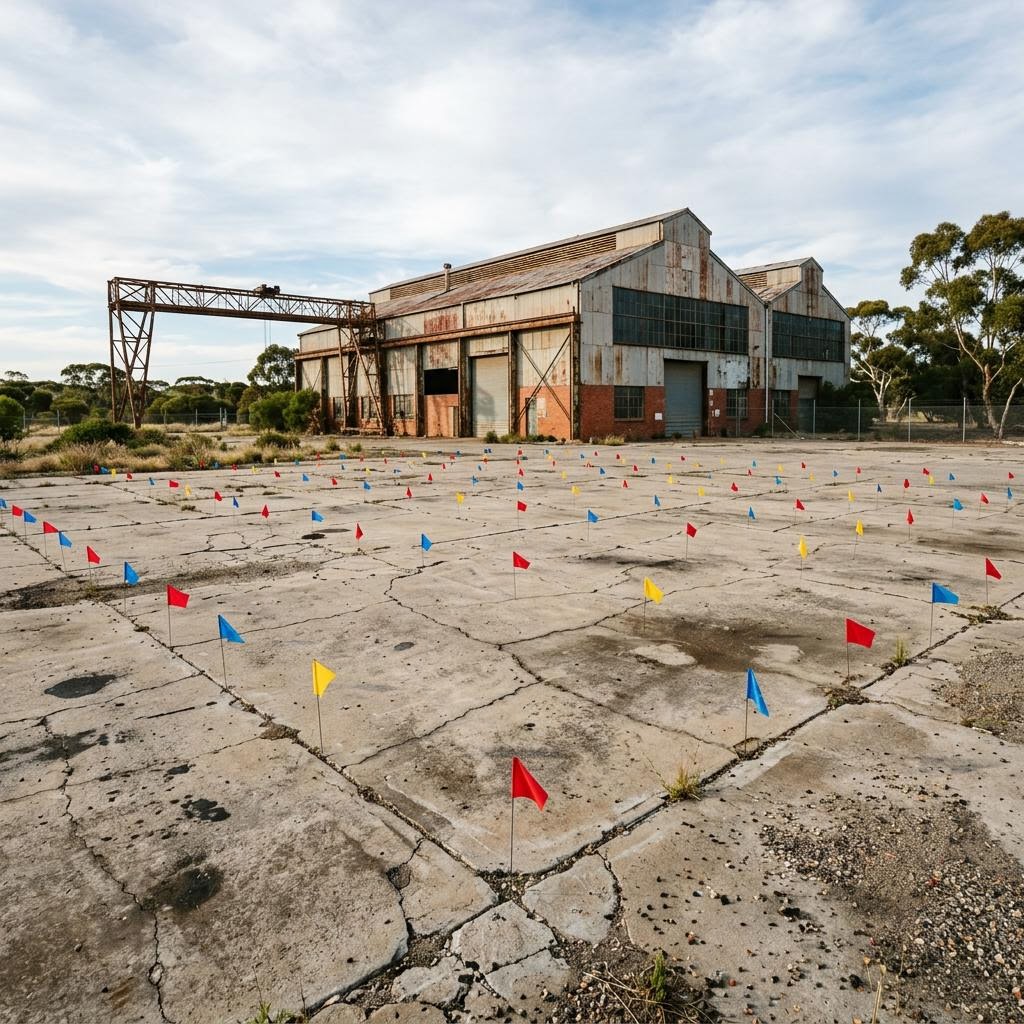
A conceptual site model brings together what is known and suspected about contamination at a site. It connects possible sources to pathways and receptors, helping explain why particular investigation questions matter. It can be a diagram, a cross-section, a table or a combination of these.
This is a guide to reviewing and updating that model with your consultant. It is not a sampling design or a way to determine site suitability without investigation. A useful model distinguishes evidence from assumptions and changes as new information becomes available.
Distinguish the three parts of a linkage
A source is material or an area that may release a contaminant. A pathway describes how that contaminant could move or reach someone or something. A receptor is the person, environmental feature or other relevant entity that could be exposed. A historical fuel storage area, groundwater movement and a nearby waterway might form one potential linkage.
Use contaminated land investigation and risk characterisation to test these relationships. A suspected source is not proof of contamination, while a gap in pathway information is not proof that no pathway exists. Keep both distinctions visible when reviewing conclusions.
Make the model specific to the future use
Proposed buildings, gardens, excavations and services can change exposure or movement pathways. A paved industrial yard and a future residential garden do not present the same contact scenario. Draw the intended development on the model rather than interpreting the site only as it appears today.
For example, a new basement may extend into a zone that previous shallow work did not address. The useful question is not whether the old report found a problem somewhere else, but whether its evidence covers the new excavation and the pathways that excavation could create.
- Show current and proposed land use separately.
- Locate known and suspected source areas with evidence references.
- Include off-site pathways where relevant.
- Identify inaccessible areas and uncertain subsurface boundaries.
Use uncertainty to choose the next question
Give each important linkage a status such as suspected, supported by evidence or not supported within stated limitations. Record the reason, not just a colour on a diagram. A reviewer should be able to trace the status to historical information, field observations or analytical results.
Ask which uncertainty could change the decision about investigation, management or intended use. Specialists can then design work to address that uncertainty. This is more useful than requesting the same sampling pattern everywhere, irrespective of site history and environmental setting.
Update the model and communicate its limits
Unexpected fill, a newly located tank or a change in groundwater interpretation should trigger review of the relevant linkages. Keep dated versions and a short explanation of what changed. Without version control, a construction team may continue using a reassuring early diagram after later evidence has altered the interpretation.
At handover, ask for a plain-language summary of supported linkages, unresolved questions and implications for the next project stage. A model supports professional judgement; it is not a guarantee that every contaminant or pathway has been identified, and it does not by itself authorise excavation or disposal.
Key takeaways
- Read sources, pathways and receptors as connected relationships.
- Separate suspected conditions from demonstrated findings.
- Test the model against intended land use and works.
- Let decision-relevant uncertainty guide further work.
- Keep the model current as evidence changes.
Frequently asked questions
- Is a conceptual site model only a drawing?
- No. A diagram is useful, but supporting tables, cross-sections and evidence references often carry the reasoning and limitations needed to interpret it.
- Does an incomplete linkage mean there is no risk?
- Not necessarily. The pathway may genuinely be absent, or the information may be insufficient. The model should distinguish these situations and explain the evidence.
- When should the model be updated?
- Review it when new evidence, changed site conditions or a revised development could alter sources, pathways or receptors. Your consultant can identify which changes matter.
Clarify the linkages at your site
Bring historical reports and your intended development plans to a discussion about investigation priorities.
Related services
- Contaminated Land Investigations — Soil and groundwater testing that turns unknowns into a documented, manageable picture.
Keep reading
- Phase 2 environmental site assessments explained — A Phase 2 environmental site assessment moves from desktop review to physical sampling, confirming whether contamination is present and how it might affect your project.
- Groundwater contamination assessments: the basics — Groundwater contamination can migrate off-site and persist for years. A well-designed assessment identifies the problem, defines its extent, and guides management.