Construction Noise and Vibration Monitoring: Choosing Representative Locations
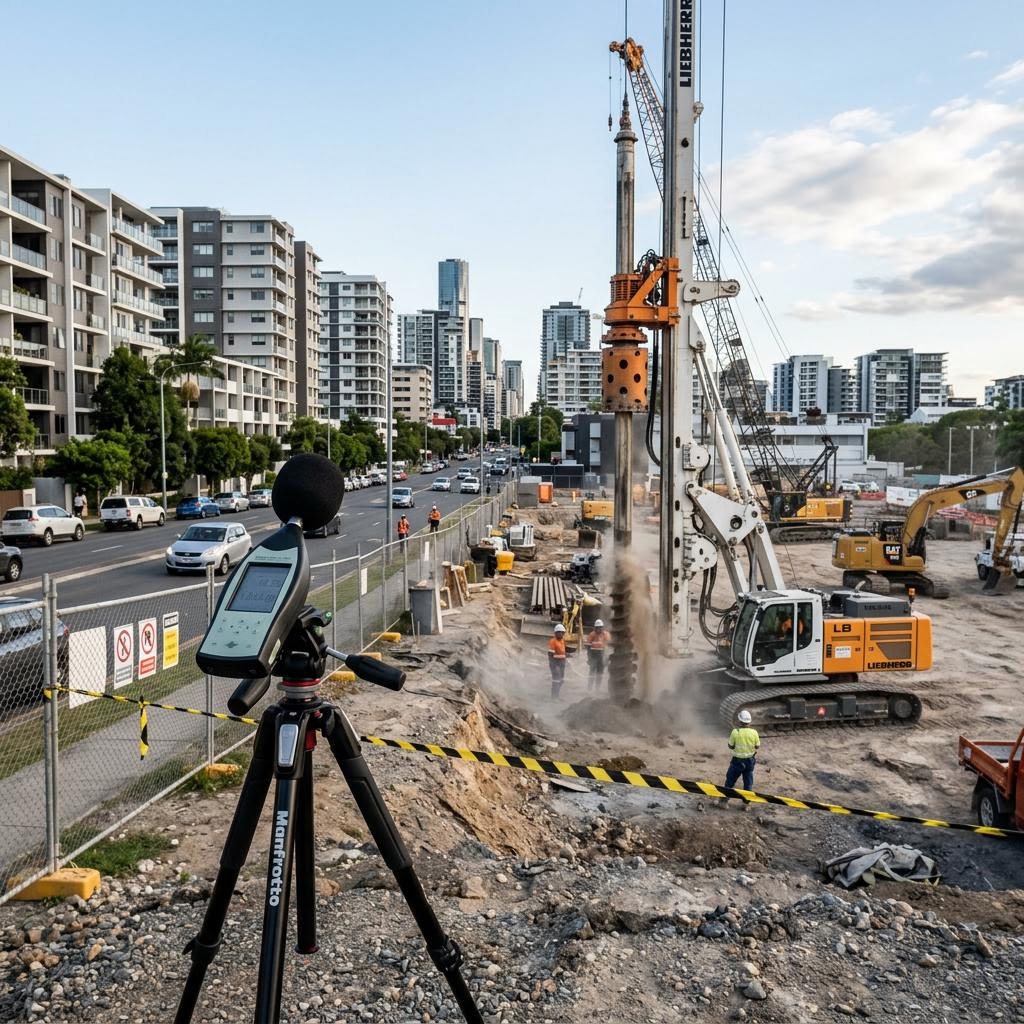
A monitoring location determines what a measurement can tell you. A convenient position inside a compound may be useful for tracking activity but may not represent exposure at a nearby residence or vibration at a sensitive structure. Noise and vibration also need different siting considerations.
Project managers can support location selection by sharing receiver information, works staging and access constraints. The practitioner should select and document positions using the monitoring purpose, applicable criteria and project requirements; there is no universal boundary-monitor layout.
State the measurement purpose for each location
Distinguish baseline characterisation, assessment at a receiver, investigation of a complaint and operational trend monitoring. The same device position may not serve all four purposes. Identify the metric, period and receptor the data is intended to represent before looking for a convenient installation point.
During construction noise and vibration monitoring design, ask for a location schedule explaining each position’s purpose and limitations. Where a proxy location is needed, the practitioner should explain how its results relate to the target receiver rather than implying the positions are interchangeable.
Map receivers against the changing works
Provide nearby residences, schools, operating facilities and sensitive structures or equipment relevant to the assessment. Include work zones, plant movements and the sequence of noisy or vibration-generating tasks. The nearest point is not automatically the most representative or most sensitive position.
For example, a retained wall may matter for vibration while an upper-level dwelling matters for noise. A single ground-level location selected for convenience may address neither question well. Ask how the selected network covers the relevant receiver types and stages.
- Receiver type and assessment purpose.
- Location relative to each relevant activity.
- Work stages requiring review or relocation.
- Access permissions and safe installation arrangements.
- Limitations and any relationship to a proxy position.
Address practical siting constraints without hiding them
Noise measurements can be influenced by reflecting surfaces, screening, weather and unrelated sources. Vibration measurements depend on the relevant assessment location and how the sensor is installed and coupled. Do not move a sensor or change its mounting to accommodate site operations without practitioner review.
Security, power and communications are practical requirements, but they should not silently override representativeness. If the preferred receiver location is unavailable, record the constraint and agree an appropriate alternative, its interpretation and any additional observations needed.
Review the network when conditions change
Keep photographs, coordinates or clear location descriptions, installation details and the dates each position was in use. Record relocations and periods of missing or unreliable data. A continuous graph can conceal a change in measurement context unless these events are annotated.
Revisit the network when activities move, screening changes or a new receiver concern arises. A location suitable during early earthworks may not answer a later piling question. Monitoring positions should remain connected to the live work programme rather than becoming fixed simply because equipment is already installed.
Key takeaways
- Define the question for every monitoring position.
- Treat noise and vibration siting separately.
- Map receivers against work stages.
- Document proxy positions and their limitations.
- Review locations when activities or surroundings change.
Frequently asked questions
- Is the site boundary always the right monitoring location?
- No. The appropriate position depends on what is being assessed, the receiver and the applicable measurement requirements. A boundary location may be useful but is not automatically representative.
- Can one monitor represent every nearby receiver?
- Not necessarily. Different receiver types, directions and work stages may require different positions or supporting assessment.
- Can the site team relocate a vibration sensor?
- Arrange changes with the practitioner. Location and installation affect interpretation, so an undocumented move can make results difficult to compare.
Design monitoring around your receivers
Share your works sequence, receiver map and access constraints to discuss representative monitoring positions.
Related services
- Noise & Vibration Assessments — Baseline studies and live monitoring for construction, transport, and industry.
Keep reading
- Vibration Monitoring Exceedances: Planning Alerts, Checks and Responses — An alert is useful only when a responsible person knows what to do and how to document the response.
- Construction Noise Rules in Australia: A State-by-State Overview — Construction noise is regulated differently in every state and territory. Here is how the rules work, what limits apply, and how to stay compliant.