Construction Waste Management Plans: Segregation, Reuse and Tracking
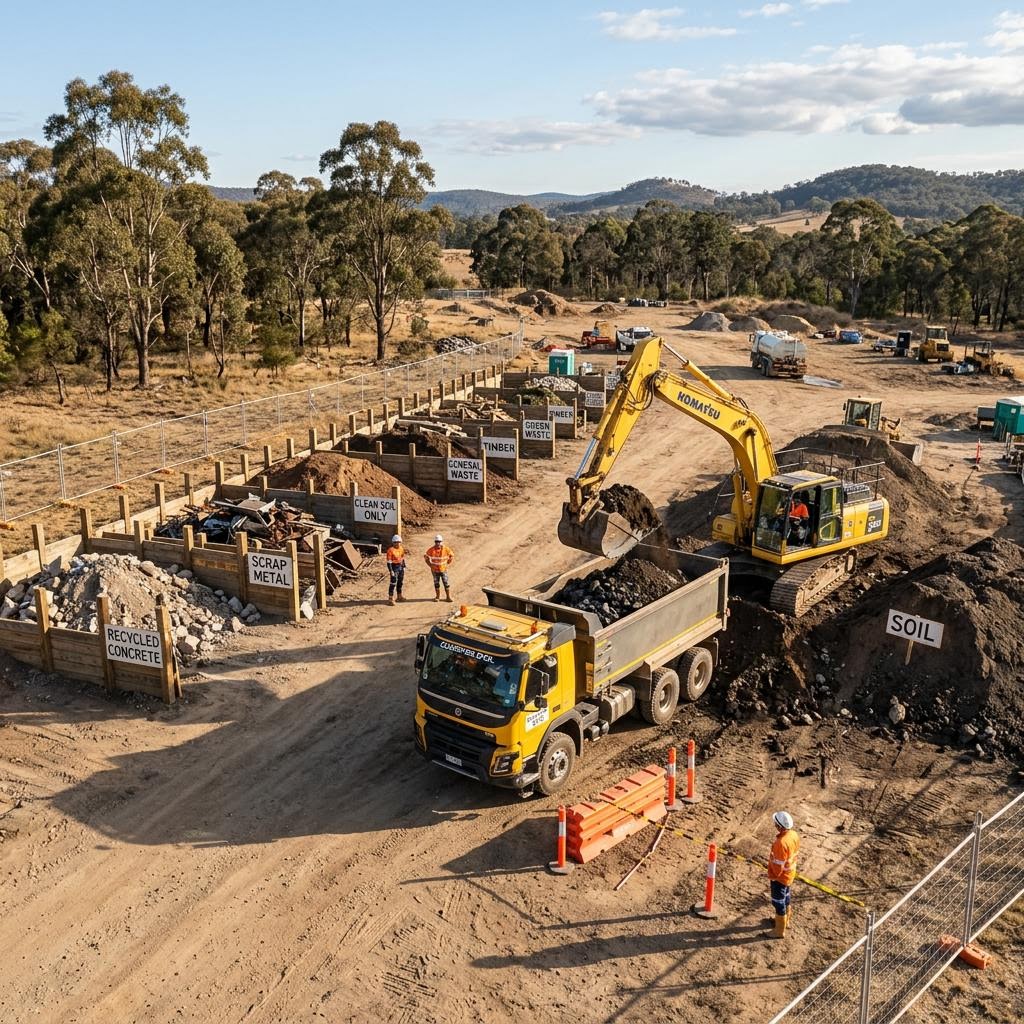
A construction waste management plan should describe how materials will move through the site, not just state an intention to recycle. The useful detail is operational: what streams arise, where they will be kept, who checks them and what evidence follows each movement.
This article focuses on implementation and tracking rather than replacing waste classification advice. Reuse and disposal pathways depend on the material, destination and jurisdiction. A material is not suitable for reuse simply because a project wants to keep it out of a waste stream.
Map waste streams to work stages
Identify likely materials from demolition, excavation, deliveries and construction activities. Keep potentially hazardous or uncertain materials distinct from routine clean streams. Estimates help plan storage, but actual findings can change the expected streams and need to be assessed.
Use construction waste management planning and classification advice to connect those streams with appropriate assessment and management pathways. A general waste plan should not be treated as classification evidence for every stockpile or load.
Design segregation that survives site operations
Show storage areas on a current logistics plan, allowing for vehicle access, weather protection, drainage and changing construction stages. Label streams clearly and assign responsibility for checking what enters them. Segregation becomes unreliable when temporary relocations are not communicated.
For example, a container intended for separated timber may become mixed waste if packaging and offcuts from several trades are placed in it. Include induction information and routine checks, and define how the team will manage a contaminated or uncertain stream without quietly relabelling it.
- Stream identifier and accepted material description.
- Storage location and environmental controls.
- Person responsible for checking segregation.
- Process for uncertain or unexpected materials.
- Destination checks and required movement records.
Verify the pathway before moving material
Confirm the relevant classification, acceptance conditions and destination arrangements before dispatch. A receiving facility’s willingness to accept material does not by itself establish that every regulatory requirement has been met. Reuse may require specific evidence and conditions rather than a simple verbal agreement.
Keep the decision trail linking the assessed material to the actual stockpile or load. Where the material changes or mixing occurs, seek review before relying on earlier documentation. Do not assume that a classification from one area applies to visually similar material elsewhere.
Reconcile the records with actual site movements
Use load identifiers, dates, stream descriptions, destinations and quantities with their units. Retain relevant dockets and receiving records. When volumes and masses are both used, keep the measurement basis clear instead of combining them as though they were the same quantity.
Review discrepancies between site dispatch records and destination receipts. Missing records, rejected loads or unexpected destinations should become actions with owners. At project handover, the record should show what happened to each significant stream, not only what the original plan predicted.
Key takeaways
- Link waste streams to actual work stages.
- Keep uncertain materials separate.
- Verify pathways before dispatch.
- Trace classification evidence to the material moved.
- Reconcile dispatch and receiving records.
Frequently asked questions
- Does separating material make it suitable for reuse?
- No. Segregation helps preserve options, but suitability depends on material characteristics, the proposed use and applicable requirements.
- Can one classification cover every load from a site?
- Not automatically. Coverage depends on the assessed material and evidence. Changes in source, composition or mixing may require further review.
- Why retain receiving records as well as dispatch dockets?
- They help confirm the destination and quantity actually received and identify discrepancies, rejections or gaps in the movement trail.
Make the waste plan usable on site
Share your construction stages and expected streams to discuss segregation, classification and tracking arrangements.
Related services
- Waste Management Plans — Practical waste planning and soil classification for construction and demolition.
Keep reading
- Guide: waste classification for Australian projects — A guide to classifying waste and surplus soil on Australian projects so material goes to the right facility and disposal stays compliant.
- 7 Waste Classification and Disposal Mistakes in Australia — Misclassifying waste can turn a routine disposal into a compliance problem. These are the waste classification and disposal mistakes that most often go wrong.