Water Sampling Quality: Containers, Preservation and Chain of Custody
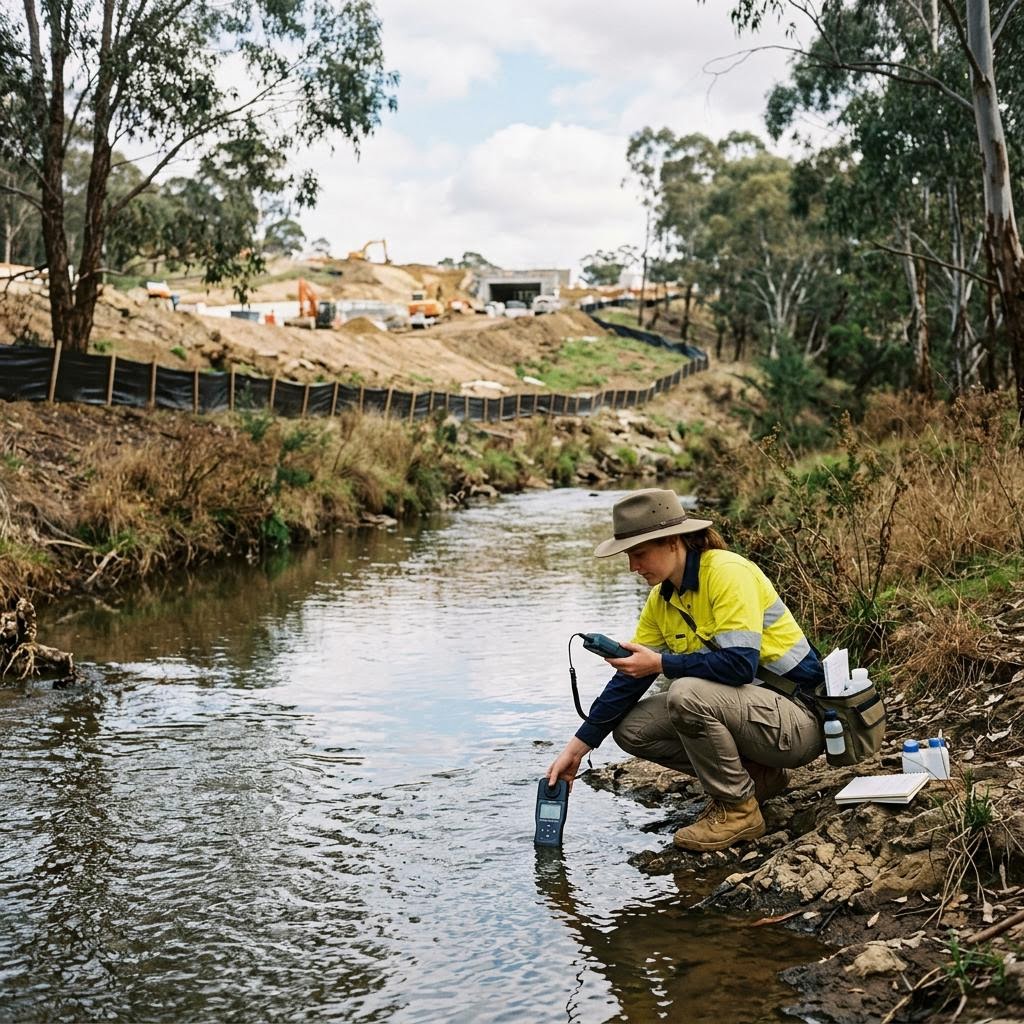
A water result depends on more than laboratory analysis. The sampling plan, container selection, handling, preservation and records all affect whether the reported value can answer the original question. Gaps can remain invisible if the team reviews only the final concentration table.
This article explains what customers should arrange and check when commissioning professional sampling. It is not a universal collection procedure: requirements differ by analyte, water type, method and laboratory instructions.
Agree analysis and laboratory requirements before mobilisation
Tell the practitioner why testing is needed, what water is being assessed and which decision the results will support. The analytical suite and reporting requirements should follow those questions. A standard bottle kit may not cover every parameter or the required level of detection.
As part of water quality sampling, laboratory analysis and interpretation, confirm that suitable containers, preservation and delivery arrangements are established with the laboratory. Do not substitute household containers or add preservatives yourself.
Keep sample identity unambiguous
Use a location schedule with unique identifiers, descriptions and relevant maps. The field label, sampling record, chain-of-custody form and laboratory report should refer to the same sample without guesswork. Record the event time and any deviations that could affect interpretation.
For repeated monitoring, avoid reusing one identifier for different points without an explanation. If an upstream access point is unavailable and a substitute is used, document the change rather than presenting both locations as an unchanged time series.
- Unique sample and location identifiers.
- Collection date, time and responsible sampler.
- Requested analyses and agreed reporting needs.
- Relevant field observations and deviations.
- Transfer and laboratory receipt records.
Let the method determine handling and preservation
Some parameters require particular container materials, preservation conditions or prompt analysis. Field measurements may also be needed for properties that change quickly. The practitioner and laboratory should establish the applicable requirements before the event rather than trying to repair handling gaps afterwards.
For example, a delayed courier collection may affect whether certain results remain suitable for the intended purpose. Keep the delay and receipt information in the record, ask the laboratory and practitioner about its significance, and do not assume every analyte is affected in the same way.
Review custody and quality information with the results
Chain of custody records sample identity and transfer through the process. It does not, by itself, prove that the sample represents the waterbody or that every handling requirement was met. Review it alongside field notes, laboratory receipt conditions, analytical qualifiers and the quality checks specified in the plan.
Before relying on the dataset, ask whether any departures limit a comparison or require further sampling. Preserve qualified results with their explanation instead of deleting inconvenient entries. A transparent limitation is more useful than a clean table that conceals uncertainty about how the sample reached the laboratory.
Key takeaways
- Choose analyses from the decision purpose.
- Confirm laboratory arrangements before the visit.
- Use consistent unique sample identities.
- Follow analyte-specific professional handling requirements.
- Read custody and quality records alongside concentrations.
Frequently asked questions
- Can any clean bottle be used for water testing?
- No. Container and preservation requirements depend on the analysis. Arrange suitable laboratory-supplied or specified containers through the practitioner.
- Does chain of custody prove the sample is representative?
- No. It documents identity and transfer. Representativeness depends on the sampling design, collection conditions and supporting records.
- Is there one holding time for every water sample?
- No. Requirements differ by parameter and method. Confirm them with the laboratory before sampling and review any departures with the practitioner.
Plan water testing before collecting samples
Share the water source and decision purpose so sampling, laboratory arrangements and reporting can be scoped together.
Related services
- Water Quality Testing — Sampling and analysis across surface water, groundwater, stormwater, and wastewater.
Keep reading
- Reading Water Quality Reports: Units, Detection Limits and Trends — Read the qualifiers and comparison basis before interpreting a concentration or trend.
- Water Quality Monitoring for Construction Projects — Sediment-laden runoff and site discharges can breach environmental limits fast. Here is how water quality monitoring keeps construction projects compliant.