Baseline Air Monitoring: Accounting for Weather and Nearby Activities
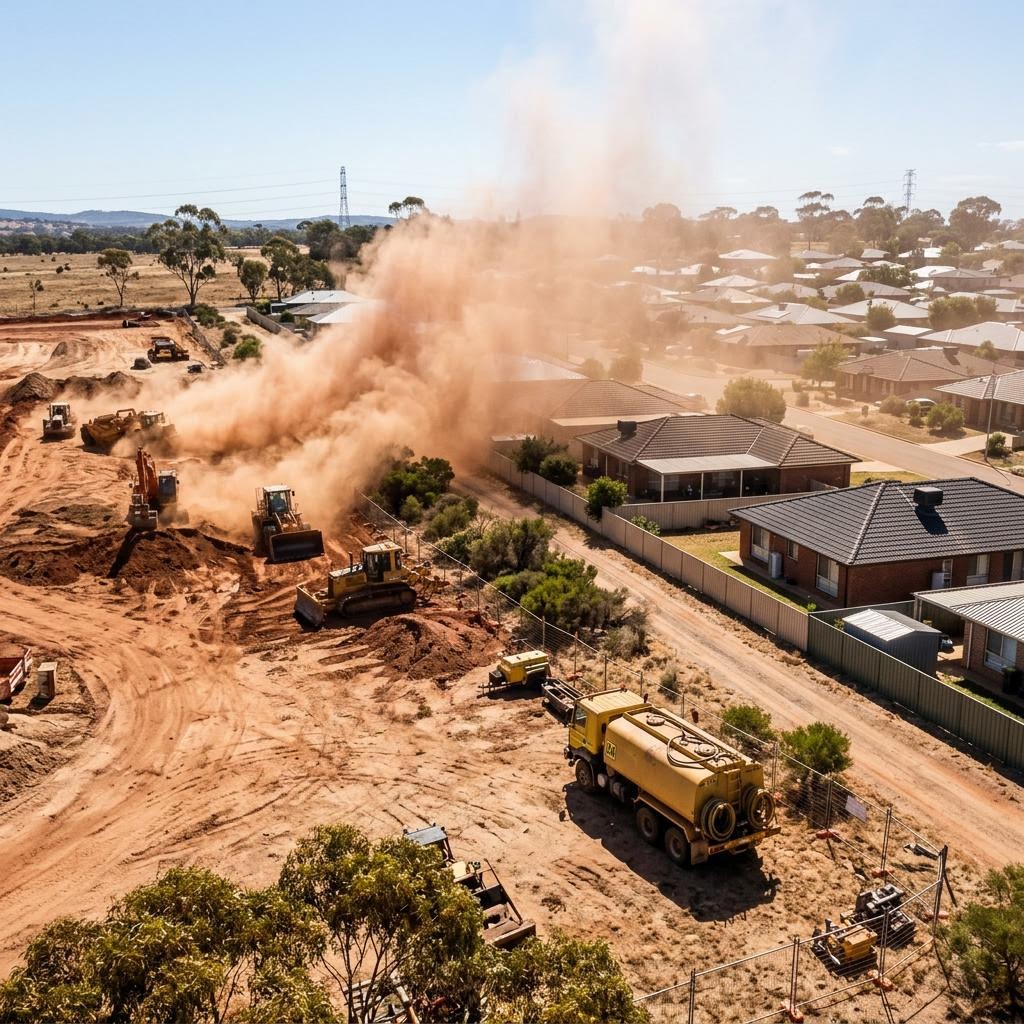
Baseline air monitoring helps describe conditions before a project’s relevant activities begin. Its usefulness depends on whether the programme captures conditions relevant to later assessment and records the influences present during monitoring.
Weather and nearby activities are part of that context. A short quiet period should not be presented as the full range of local conditions, and an unusual regional event should not disappear from the record simply because it complicates the summary.
Define what the baseline must support
Clarify whether the baseline will inform assessment, help design a monitoring network or provide context for later operational review. Identify the parameters and receiver locations relevant to that purpose. Programme duration should follow the evidence needed, not an arbitrary number of days applied to every site.
Scope baseline ambient air studies and monitoring network design before major works begin where the purpose requires pre-activity conditions. If nearby or enabling works have already started, document that fact and ask how it affects the description of the baseline.
Record weather that can explain the measurements
Wind direction and speed help interpret potential source influence, while rainfall and moisture conditions can change dust generation and removal. Consider whether the available weather information represents the monitor’s local setting. A distant weather station may not capture sheltering or coastal and terrain effects at the site.
Align instrument and weather timestamps and retain their time-zone conventions. If one system records a different clock setting, a graph can imply the wrong wind direction for an event. Document missing meteorological information so the limits of later attribution are clear.
- Weather source and its representativeness.
- Timestamp and time-zone alignment.
- Rainfall and notable local conditions.
- Instrument uptime and quality flags.
- Site observations that help explain unusual events.
Maintain a surrounding-activity diary
Record relevant road activity, neighbouring works, nearby material handling and regional events where observed or supported by reliable information. Separate direct observations from assumptions about what a neighbour was doing. The diary should support interpretation without making unsupported allegations.
For example, a high particulate period during a regional smoke event should remain visible alongside the weather and activity record. The practitioner can explain whether and how it is treated in the assessment. Removing it without a documented basis weakens the evidence trail.
Compare later conditions on a like-for-like basis
Check parameter, method, location, averaging period and valid-data coverage before comparing baseline and construction measurements. A changed instrument position or method may explain a difference that would otherwise be attributed to project activity.
Report the observed range and important limitations rather than reducing the baseline to a single permanent background value. If seasonal conditions were not captured, say so. The baseline supports interpretation of later data, but it does not establish the source of every future peak or guarantee that all variability has been measured.
Key takeaways
- Define the baseline’s decision purpose.
- Document whether relevant work has already begun.
- Align weather and monitor timestamps.
- Keep observed and assumed activity information separate.
- State coverage limits when comparing later results.
Frequently asked questions
- How long should baseline monitoring run?
- Duration depends on the assessment purpose, required guidance, local variability and programme design. There is no single duration suitable for every project.
- Can unusual regional events be excluded?
- Any treatment of unusual events needs a documented, technically appropriate basis. Retain the data and explain the decision rather than silently removing it.
- Can baseline data prove a later reading is unrelated to the project?
- Not on its own. Later attribution requires the relevant monitoring context, weather and activity evidence as well as the baseline.
Establish a useful air quality baseline
Provide the activity programme, receiver locations and available weather information to scope baseline monitoring.
Related services
- Air Quality Monitoring — Dust, emissions, and ambient air monitoring for construction and industry.
Keep reading
- PM10, PM2.5 and Deposited Dust: Understanding Monitoring Results — Airborne particulate concentrations and dust deposition measure different things and cannot be compared directly.
- Dust Monitoring on Construction and Demolition Sites — Dust is a leading cause of complaints and regulator attention on building sites. Here is how monitoring works and how to keep it under control.