Cumulative Environmental Impacts: What Project Teams Should Consider
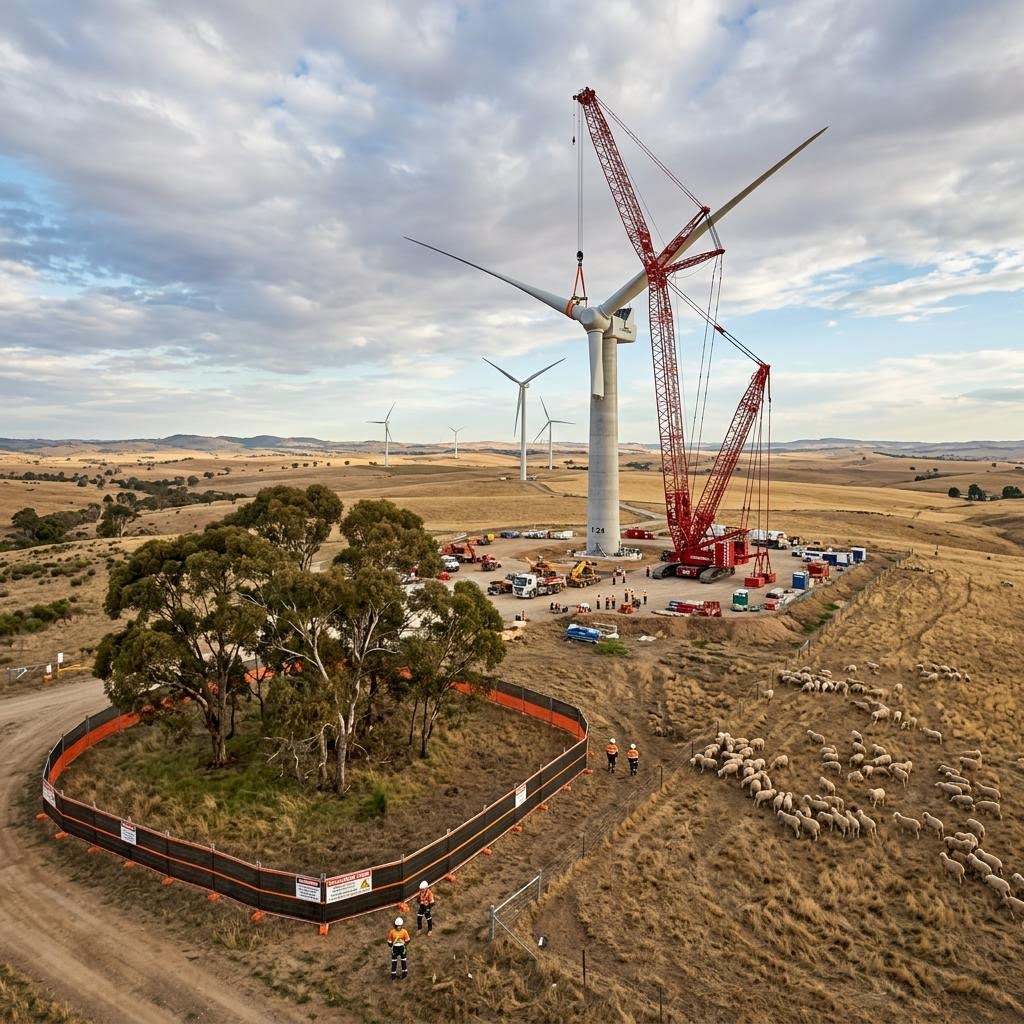
A project may affect a creek, residential area or habitat corridor that is already influenced by other activities. Cumulative impact assessment asks how those influences combine over time and space. It is not simply a list of neighbouring developments, and it does not assume every nearby activity contributes equally.
For a project team, the practical task is to identify shared receptors, build a credible activity scenario and state uncertainty openly. The extent of assessment depends on the proposal, the receiving environment and the applicable approval pathway.
Begin with the shared receptor
Map the environmental features and communities that may experience more than one influence. Two sites in the same catchment may contribute runoff to one reach of a creek even if they are not neighbours. Conversely, two nearby sites may drain in different directions and have little shared water-quality interaction.
As part of environmental impact assessment and mitigation planning, distinguish the project’s individual effects from the combined change at each receptor. This keeps the analysis relevant to the receiving environment rather than a convenient circle drawn around the site.
Define spatial and temporal boundaries explicitly
Different issues need different boundaries. Noise may depend on simultaneous activities during a particular shift, while habitat fragmentation can accumulate across a landscape over a much longer period. A single boundary or assessment period is unlikely to suit every discipline.
Build an activity timeline using available information about existing operations and other relevant proposals. State which activities are confirmed, reasonably foreseeable or uncertain, and explain how that distinction affects the scenario. Avoid presenting a speculative project programme as established fact.
- Identify the pathway connecting each activity to the receptor.
- Record construction and operating periods relevant to that pathway.
- List the information source, date and confidence for other activities.
- Check whether changing project stages alter the combined effect.
Avoid double counting and unsupported attribution
Existing monitoring may already include influences from operating neighbours, roads or regional conditions. Adding those influences again as though they were absent from the baseline can overstate the combined effect. Ask specialists to explain what the baseline represents and how proposed contributions are treated.
For example, two earthworks projects may coincide during a dry period. A meaningful dust assessment considers their activity schedules, wind conditions and shared receivers. A high reading alone does not prove which project caused it, and contributions should not be assigned without supporting evidence.
Translate the finding into coordinated actions
Identify actions within the project’s control, such as changing a haul route, retaining a corridor or adjusting a noisy work sequence. Where the assessment depends on another operator’s actions, make that dependency visible and discuss what coordination is feasible rather than promising an outcome the project cannot deliver.
Keep a scenario register with the evidence used, assumptions, remaining uncertainty and triggers for review. If a neighbouring programme changes materially, the team can revisit the relevant scenario rather than repeating the entire assessment or relying on an outdated conclusion.
Key takeaways
- Shared receptors determine meaningful boundaries.
- Timing matters as much as physical proximity.
- Document the certainty of other project scenarios.
- Do not count existing baseline influences twice.
- Separate controllable mitigation from external dependencies.
Frequently asked questions
- Does cumulative assessment cover only neighbouring construction?
- No. Relevant influences may include existing operations, regional background conditions and other activities connected to the same receptor. Inclusion depends on the issue and assessment scope.
- Should every announced project be included?
- Not automatically. Use the applicable assessment requirements and document how the certainty, relevance and available information for each proposal have been treated.
- Can a baseline measurement identify each contributor?
- Usually not on its own. Attribution may require activity records, meteorology, spatial comparisons or other specialist evidence.
Assess the wider receiving environment
Share known nearby activities and project stages so cumulative questions can be included in your assessment scope.
Related services
- Environmental Impact Assessments (EIA) — Understand how a proposed project may affect its surrounds — before development begins.
Keep reading
- Environmental Impact Assessment Scoping: Defining the Questions Before Fieldwork — Turn a project description into an assessment question register before commissioning field studies.
- Guide: environmental requirements for development approvals — A guide to the environmental studies development approvals demand across Australia, and how to scope them early to avoid resubmission.